How Kids Judge Others by the Content of Their Character
By Jean Tracy, MSS
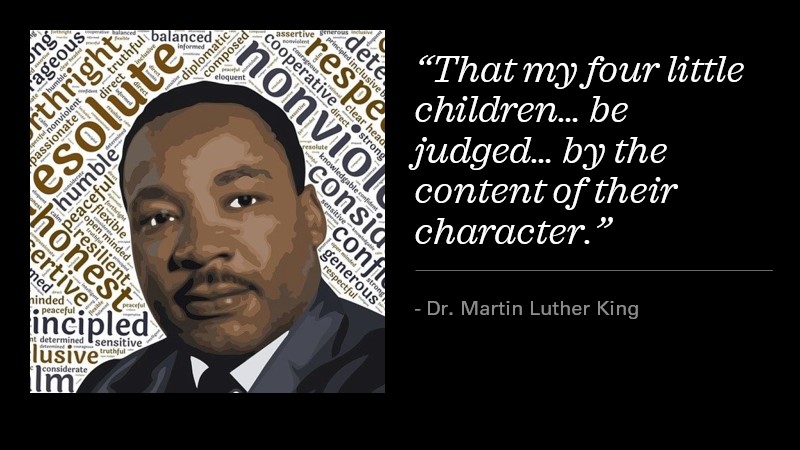
Martin Luther King, Jr. wanted his four little children (and all people) judged by the “content of their character,” not “the color of their skin.”
Effective parents teach children to judge. Not by skin color but by searching for the good.
Today, I’ll share how this judgment works through the story of Gabby, a family activity, and an activity that increases others’ self-esteem. It creates friendships too.
Practice it in your home. I guarantee it will boost your family’s love. Then watch it spread outward from your family to others.
The Story of Gabby
(To protect privacy, all the names are changed because the people are real.)
Gabriella, 13 years-old, is taking a peer coaching class. She assists Mrs. Matlin, who teaches 10 special needs children, like:
- Daniel, who repeatedly runs around the room.
- Lucas, who lets out blood curdling screams that make everyone jump.
- Olivia, who stutters and gets mad if asked questions she doesn’t want to answer.
Every day, Mrs. Matlin and Gabby praise each child for small signs of progress.
Gabriella smiles as she tells each child what they did well. Sometimes a child rewards Gabby by smiling back.
Gabby knows each child is capable of learning and that progress will be slow. With patience and kindness, she hopes to boost their self-esteem and help them learn. She thinks, “Maybe someday I’ll follow in Mrs. Matlin’s footsteps.”
Here’s how Gabby’s family teaches her to judge, love and respect each student. They practice it once a week:
The Family Judgments
Before dinner, the family picks a love note that has a member’s name on it. They write something nice about that person and sign it.
Then they put it in a glass bowl in the center of the dinner table.
After dinner Gabby empties the bowl and passes out the love notes to the signers.
With dessert, often chocolate chip cookies, they take turns reading the love note they wrote. Then they give it to the receiver. The member says, “Thank you” and keeps the love note in their own special box.
Sometimes the whole family discusses the receivers love note and why it’s true. The discussion is always relaxed and friendly.
Here Are Some Love Notes They Wrote:
- Grandma, I love when we cook together.
- Zoey, your laughter is like sunshine in our house.
- Mom, I love how interested you are in our lives.
- Dad, I appreciate how hard you work.
- Son, your upbeat nature is fun to be around.
- Lucas, I love you because you play with me.
- Gabby, I love how we treat each other. Our bond is special.
- Grandpa, I love our chats.
- Daddy, I love how you help me.
As you can see, several compliments can easily spark a family conversation.
Whenever a member feels low, they can open their box and read their love notes.
Building a Strong Foundation
Gabby and her family have been exchanging love notes since she was 4 years-old. Before she could write, she either drew a picture on her love note or dictated it to someone older.
Love notes have given Gabby a strong foundation. That’s why she’s able to treat special needs children with thoughtful judgment, caring and respect. She knows that looking for the good is the best way to boost their characters.
Bringing Out the Best in Everyone
“When we seek to discover the best in others, we somehow bring out the best in ourselves.” William Arthur Ward
Some people ask, “What’s in it for me?”
This is not the attitude you want for yourself or your child. Yet, there are positive outcomes for your children too:
- They may make friends more easily.
- They may be praised in return.
- They develop a caring attitude.
A better question to ask is, “What does looking for the good in others do for the receiver?”
Recently, I passed a man who was sitting alone in a restaurant. I said, “You have a magnificent head of hair.” He smiled and stroked his hair. I smiled back and said, “I’m jealous.” He kept on smiling. (I’m old enough to be his mother.)
I wondered what my honest compliment did for him.
- Did it lift his spirits?
- Did he tell a friend?
- Would he later look in a mirror?
I hope you can see how judging others by ‘the color of their skin’ is superficial. Divisions spread, feelings get hurt, and tempers rise.
Let’s teach our children to judge by searching for the good in others’ characters. Why? Because Martin Luther King, Jr. was right. Finding the good brings out the best in everyone. It’s such an easy way of spreading unity and love.
Gabby and Mrs. Matlin do that every day. They not only bring out the best in the children they serve, but they also bring out the best in themselves.
Your free gift
To download the free gift for this article, submit the gift code: NOTES